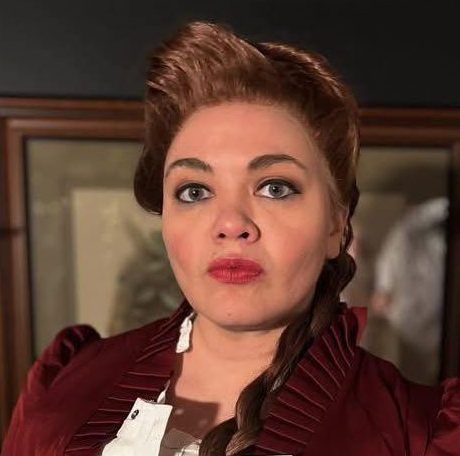
Kate McConnell is the director of Sassafras & The Captain, She uses her artistic gifts for advocacy to bring those in the shadows into the light. “My drive as an artist is to tell the stories of those who are too often ignored. I’m an activist in everything I do, and that includes the art I choose to make.” She makes humor an important aspect of her work. “I’m also someone who believes there’s humor in everything and keeps my joy in easy reach. So, no matter how serious a play is, I find the moments of levity that help make the poignant moments all the more meaningful. Getting to work on a comedy like this one, then, feels like a real gift.” Collaboration is key in the productions she works on. “Finally, I’m first and foremost a collaborator. It’s easy to see a director as someone who’s in control of everything, but when you see a project I’ve worked on, you’re really seeing a product of the brilliance of a slew of artists, both onstage and off. I see myself more like a conductor, with my eye on the whole piece, doing my best to bring together the incredible contributions of the whole team.”

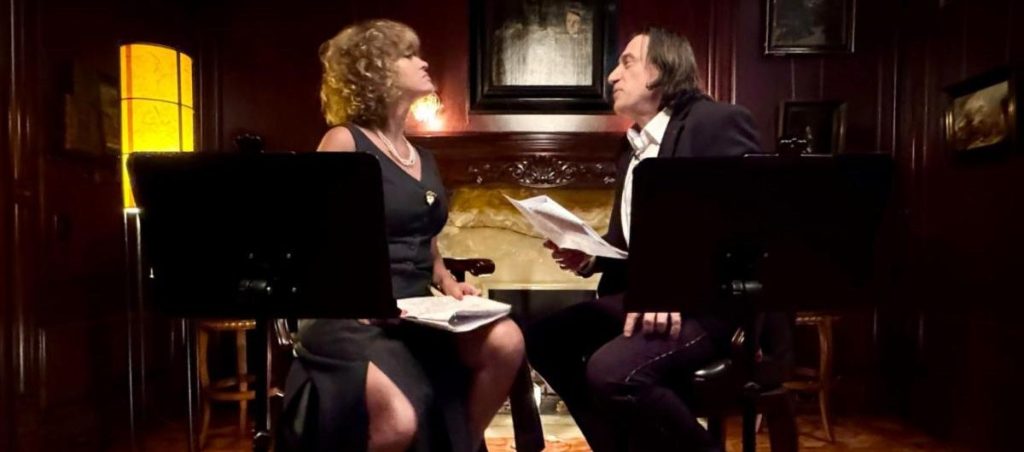
Sarah Elisabeth Brown’s send-up of S&M mores, Sassafras & The Captain, is revived as part of the 2022 Fresh Fruit “Return to Live” Theatre Festival. Limited Engagement: Thursday May 5 @ 6:00 p.m.; Friday, May 6 @ 8:45 p.m.; Sunday, May 8 @ 1:00 p.m. at The WILD PROJECT, 195 East 3rd Street, NYC. For further info: freshfruitfestival.com
When Sassafras, a role-playing submissive femme dyke, decides she wants to become a top, she upends her steady relationship with teddy-bear butch Captain Lou, and brings an old flame, the roguishly handsome boundary-pushing masochist Micky Penny, into the mix for an experiment in non-monogamy. Chaos ensues as Sassafras practices new skills of dominance, faces competition from the unassuming southern belle 50’s housewife next door, and gets schooled by the supreme Goddess of been-there-done-that, Mistress Chelsea. Can this young couple grow their love big enough to include these new elements? Or will they be shipwrecked on the sea of dyke drama? It remains – to be seen!
Sarah Brown’s uproarious play has been reworked for this new production. Sassafras was made into the award-winning 2004 film, Mango Kiss
I had the pleasure of speaking with Kate McConnell to get the 411 on her career and her experience directing this production.
What drew you to this project?
First and foremost: Sarah Brown! When she reaches out with a project, I know to always say yes, because I know she’ll be sharing the lives of characters that are too often under the radar, and telling their story with empathy, care, and humor that is undeniable. In this case, I’m also drawn to the play because, even though it takes place 30 years ago, it does such an incredible job of telling a story so similar to my own and to that of many people I know and love. As a queer person, I’m always grateful for skillful representations of my experience as an outsider in a heteronormative culture. This play is compelling because it goes a layer deeper. It tells a story of queer people navigating their place in the culture of their community – exploring a wild counterculture to identify what about it fits, what doesn’t, and why. It shows how even within the queer community, the heteronormative ideas of what relationships, gender, and sexuality looks like are pervasive, and how much of a challenge it can be to find your place within it. And then, as only Sarah can, it’s all packaged in a colorful candy shell of camp, absurdity, and humor that reminds us all how joyful and fabulous the queer experience can be.
What is your creative process?
I love to step into a rehearsal room and just see where the show takes us. Generally when I take on a project, my first step is to think about it way too much, and then to let go of all that overanalysis and let the play guide us. So many brilliant minds are together in one space in a rehearsal room or production meeting that once I’m sure I know as much as I can know, I’d rather focus on what they bring to the process than on what I can or should do next.
Do you find a sense of added responsibility when dealing with plays that tackle serious, mature, or timely subject matter?
Absolutely. I think it’s essential to do work that brings a human face to experiences or identities that are often spoken of in conceptual terms. Working on queer plays is vital because every day our country and our world are telling us that LGBTQIAA2S++ people don’t or shouldn’t exist. The more that happens, the more ecstatic I am to not only “say gay,” but to show that gay people are humans, and to help the rest of the world see that humanity as well. Even if the only people who see our big gay play are gay themselves, now is exactly the time that they badly need to see that someone sees and values their humanity. So yes, I feel absolutely responsible to use the platform I have to dive headfirst into subjects that might make an audience uncomfortable. The beauty of theatre is that it gives an audience the opportunity to feel that discomfort in the dark, and to let them process that discomfort with the people on the stage, so that maybe they can go into the world feeling a bit more comfortable and empathetic, and bring both into their interactions with others.
What’s so good about off-off Broadway/indie theater?
It gets to be risky! We have the enormous gift of being on the fringes – literally two whole “offs” from Broadway! – which means we get to do things those big for-profit theatres are often afraid to do. There’s much to be done even in our community, especially around artist compensation and representation, but I’m eternally grateful to be able to take risks by telling stories that other sectors of our industry aren’t able to tell. We are the incubator, the place where the boldest statements are being made. If you think about the edgiest, riskiest, most impactful show you’ve seen on Broadway recently, not only can you bet that its origins were in indie theatre, you can also bet that there’s an indie theatre company or festival that’s two or three steps further down that journey.
It’s obvious the world is steadily reopening. What do you feel is different now than before pandemic? Another thought: what should be different now than before pandemic?
Oh wow, yeah, everything is different now, and I’m not really sure how much of the difference is with the work, and how much is with me. It’s been so long since I worked on an in-person show (a Fresh Fruit Festival show by Sarah Elisabeth Brown in 2019, in fact!) that I feel anxious and rusty in a way I never really have. I’ve certainly been through a lot of personal change (as I know many others have as well), and it’s both terrifying and thrilling to test how those changes have changed my approach to the work. So much that used to be familiar seems new, and even when that’s not comfortable, it’s still a fuel for discovery. As for what should be different – maybe everything? First of all, I wish for a world where even shows as scrappy as ours can present their work in a hybrid, in-person/virtual way. Behind the curtain, I believe strongly that indie theatre needs to be aware of what it is – we don’t have budgets large enough to pay a living wage, so we need to embrace the reality that all of us are humans with survival jobs, families, etc and provide a more flexible space for everyone involved. For us, that has already meant embracing the virtual world for rehearsals whenever we can, to cut commute costs and time. I know there’s even more we can do that we’ll all keep discovering together.
And more important than ever, it’s essential that we do better for people in marginalized communities, and especially BIPOC. We rely so often on our own circles to cast our shows in the indie world, and we’ve seen how that is absolutely a problem when our circles look so much like us. I know we haven’t nailed it yet, and having limited budgets makes it hard to do so in a way larger companies can, but that’s all the more reason for us to think like the brilliant creatives we are to make all of our shows more representative, both on and off the stage.
What’s next for you?
Short answer: I don’t necessarily know! Right now my next project is to dig in and try to address many of the changes I addressed above for Squeaky Bicycle Productions, for which I’m Executive Producer. Our 2020 season was put on hold, and while it’s amazing that so much reopening is happening, we’re taking our time while we wait to see what variants might emerge to really examine what we want our new normal to be. What I can definitely tell you is that when we do come back, we’ll be presenting an amazing new play called Sioux Falls, by Megan Dominy, about the struggles of 3 women trying to access abortion care at South Dakota’s only provider.
In the meantime, I can tell you I absolutely will be continuing to pour myself into the fight for the rights of those who are marginalized in whatever ways I can.

 Drama Queens, a five-star arts journal focusing on female artists
Leave a comment