Liann Harder reviews the new film, Bobcat Moretti
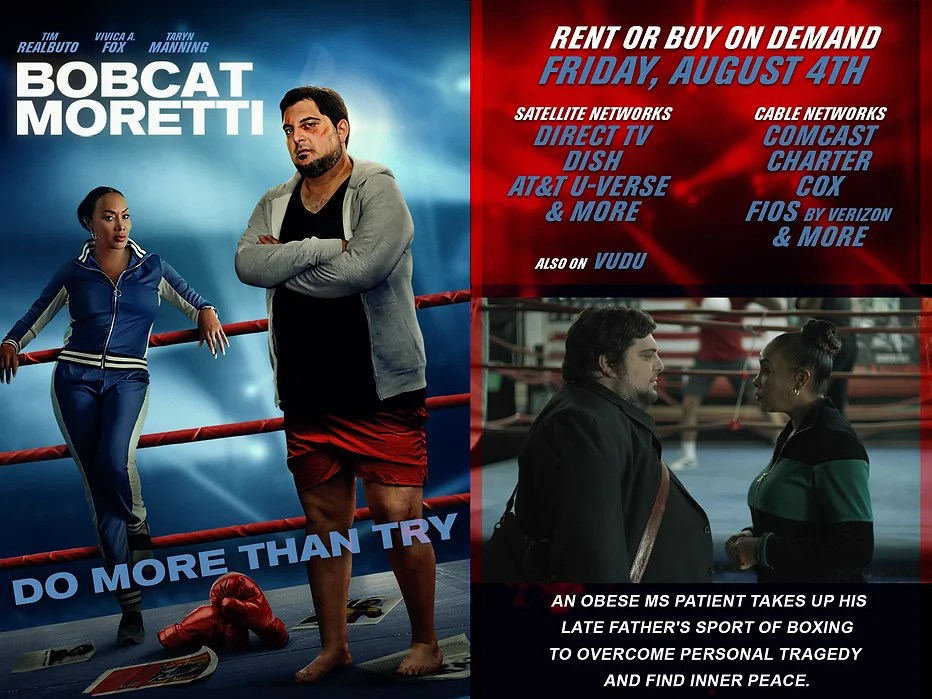
Bobby Moretti is an overweight man attempting to work his way through an unspeakable tragedy: the murder of his ten-year-old son by his wife, who then tries and fails to take her own life. As if Moretti doesn’t have enough to tackle, he starts to experience strange pains in his head, and an MRI reveals a life-changing diagnosis: Multiple Sclerosis (MS).
The eponymous film picks up when Moretti moves to the west coast and moves in with his brother’s family, pursuing peace by walking in the steps of their late father, the great boxer Nate Moretti, whose life was tragically cut short in the ring. Through pushing himself to his physical limits, Moretti discovers how to live his life with grief and a disability: one day at a time.
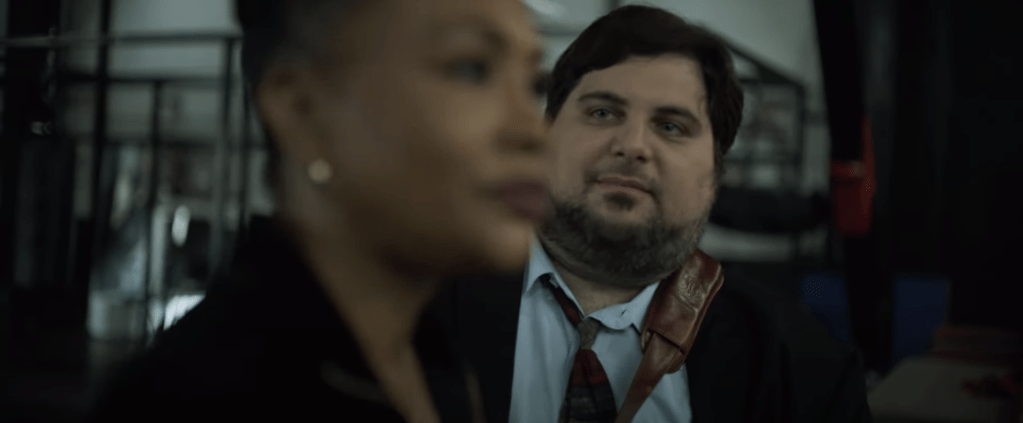
The premise behind Bobcat Moretti is simple—how does a man cope with losing everything in his life? Actor and writer Tim Realbuto underwent extreme physical transformation during the filming, losing over 150 lbs. as Moretti learns to box. But it seems as though Moretti is simply exchanging one obsession for another, and another, and another, never really healing. He becomes romantically obsessed with boxer Lacey “Boots” Harris (Sheria Irving), who clearly feels nothing more for him than friendship and is trapped in a violent on-again off-again relationship with boyfriend Tony Pinto (Jay Hieron). Moretti is constantly doubted by others because of both his larger size and his medical diagnosis, and in the face of those struggles, the audience is prepared for an intense catharsis by the time Moretti and Pinto go head-to-head in a fight that’s straight out of Rocky—but that catharsis just does not come.
The film brings solid performances from the veteran screen stars, like executive producer Vivica A. Fox who plays Moretti’s tough-as-nails trainer Joanne “Jo” Wallis. But despite plenty of compelling actors, the movie is never able to find its emotional resonance, and the final reminder that Moretti accomplished so much while living with an MS diagnosis ends up feeling like an afterthought.
The film’s inconsistent rhythm undercuts what was meant to be a powerful message. We see Realbuto’s before and after, but we don’t explore the emotional struggles that come with losing that weight. The audience may be aware that Moretti is working through his grief while he trains, but the story focuses on the unnecessary romantic rivalry. Despite its storytelling aim of celebrating life as it comes, the film is often joyless and unnecessarily brutal, like witnessing Harris’s rape at the hands of Pinto.
By the end, one longs for the moments that were missed—or perhaps left on the cutting room floor in favor of a romantic triangle or family squabble—and the neglected exploration of living an active life with a physical disability. For example, why did the film skip over seemingly critical moments in Moretti’s life, like when he discovered he needed a cane to walk? Boxing helped him lose weight, but how did that weight-loss impact his MS? How do other MS patients use boxing to tackle their everyday struggles? In the end, it’s the story Bobcat Moretti chose not to tell that leaves its audiences wanting.



 Drama Queens, a five-star arts journal focusing on female artists
Leave a comment