Article by guest writer, Dr. Mira Solis
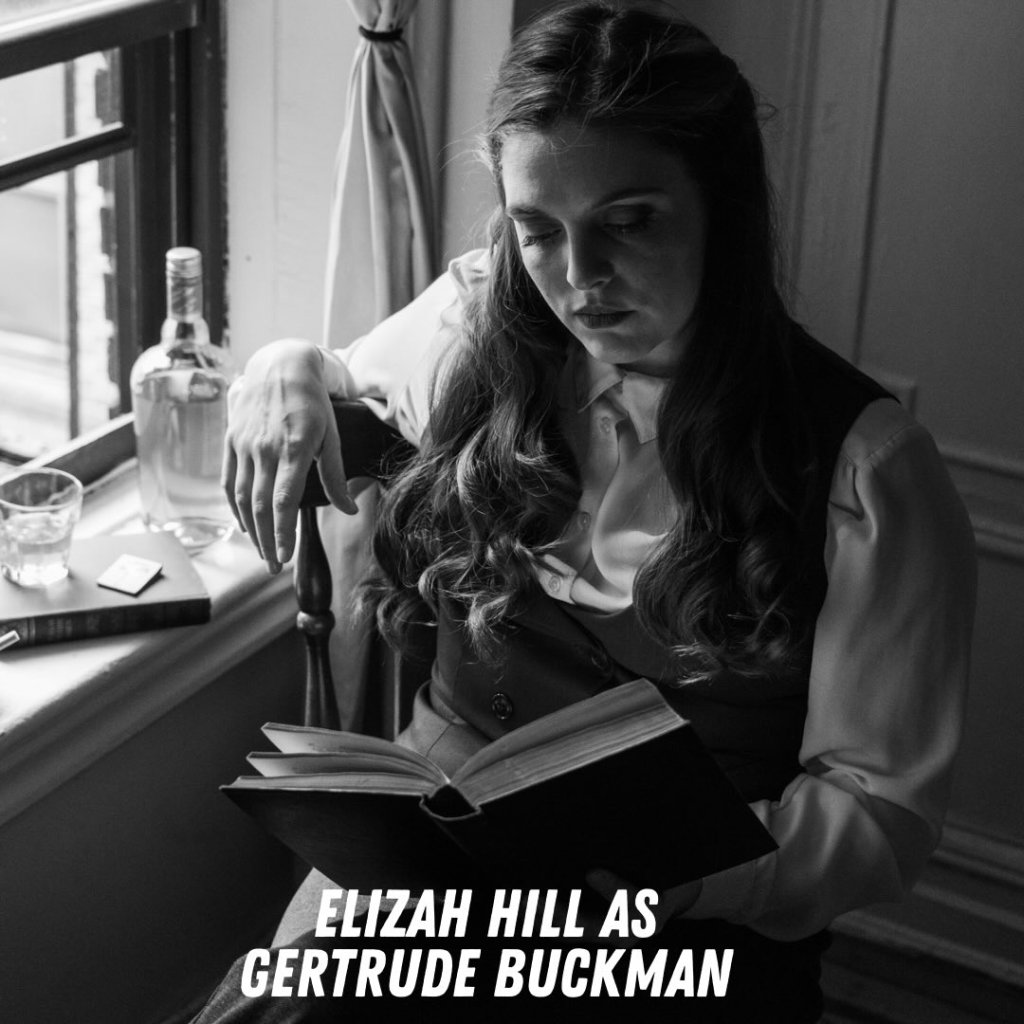
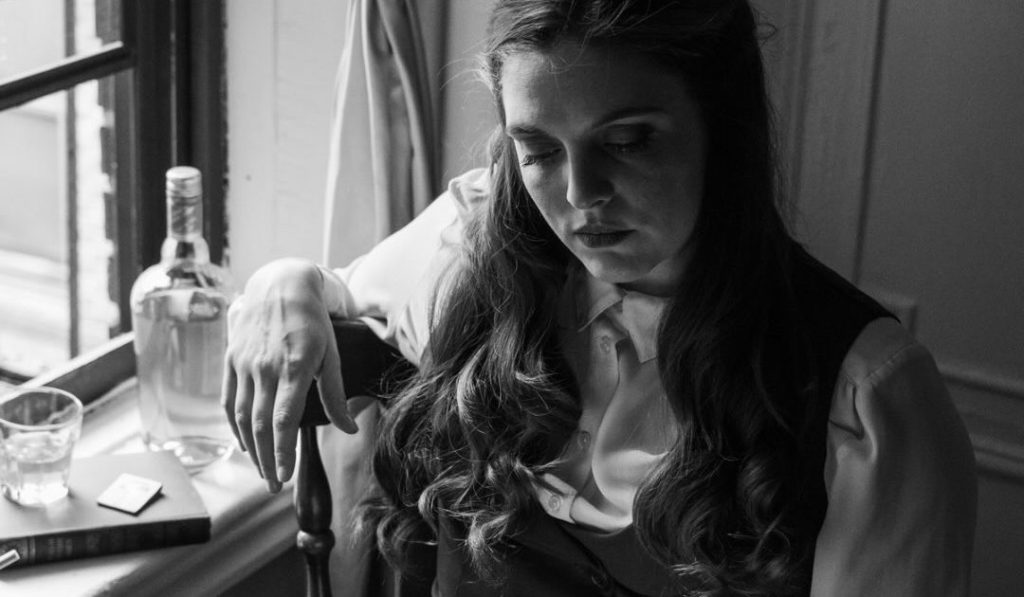
In the dual-cast landscape of Richard Vetere’s latest production, the role of Gertrude Buckman serves as a crucial emotional anchor. For Elizah Hill—a graduate of the Circle in the Square Theatre School and a veteran of stages ranging from BAM Hillman Studio to the titular role in Hamlet—stepping into Gertrude’s shoes meant navigating a historical void with a modern sense of urgency.
While the men in the play, Delmore Schwartz and James Agee, are “pillars of American letters” with vast bibliographies, Gertrude remains a more elusive figure. Hill has turned this challenge into a creative mission, finding the voice of a woman who refuses to be a footnote.
Filling the Historical Silence
“There is very limited information about [Gertrude] available outside of the private domain,” Hill explains. To bring the character to life, she has performed a delicate balancing act: gathering every accessible fragment of biography and fusing it with the “volatile” blueprint Vetere provided in the script. The result is a Gertrude who is as much a creation of the stage as she is a ghost of 1939—a woman defined by her own sharp intellect rather than just the men surrounding her.
The “Labor” of the 1939 Woman
Hill sees Gertrude’s struggle as “ultimately timeless,” though amplified by the constraints of the pre-war era. As the only woman in the room, Gertrude faces the exhausting task of ensuring her voice is not just heard, but valued.
“Gertrude’s fight is one that is all too familiar,” Hill says. “Because of the time period, she has to work twice as hard to be taken seriously and steadfast in her belief that her writing is worth just as much discourse as these men.” It is a performance rooted in the “labor” of self-assertion—a resonant theme for any woman who has had to “push forward anyway” in the face of a “no.”
Cast B: A Different Current
One of the most fascinating aspects of this production is the existence of two distinct casts. Hill describes the experience as a unique “chemistry shift.” While both trios share a history of working together in various configurations, Cast B brings a specific, internal energy to the table.
Hill describes the play’s pacing as a “current headed towards the inevitable drop.” In her trio’s dynamic, the claustrophobia stems from characters harboring chips on their shoulders that are constantly being aggravated by one another. “As the hours go by, their insecurities are being pulled out with nowhere else to go,” she notes, painting a picture of a “Noir Melodrama” that is as psychologically taxing as it is intellectually stimulating.
The “Poet on a String”
While others might point to a single tragic figure, Hill takes a broader view of the play’s central conflict. When asked who the real “Poet on a String” is, her answer is hauntingly inclusive: “All of them.” In the shadow of 1939, every character is dangling, caught between their artistic ambitions and a world that is about to change forever.
A Prescription for 2026
For an audience living in a 2026 dominated by digital noise, Hill offers a simple, radical takeaway inspired by the poets of 1939: Disconnect.
“Be present. Be bored. Let your minds wander,” she suggests. In a world of constant connectivity, Hill believes the greatest lesson we can learn from Gertrude and her companions is the value of living “off the grid”—even if it leads to a little bit of trouble.
Elizah Hill’s portrayal of Gertrude Buckman is a testament to the enduring power of the female voice. Don’t miss the specific, “volatile” energy she and Cast B bring to the ATA stage this season.


 Drama Queens, a five-star arts journal focusing on female artists
Leave a comment