In a one-woman play, Sandra Laub weaves together numerous characters into a cross-generational dialogue about the ethics of the Israeli-Palestinian conflict. Drawing from a well of personal experience, Laub fleshes out the struggles many other liberal Jews are facing: denouncing Israel’s war crimes in Gaza, having family members sent to the frontlines of the war, and making sense of it all through the lens of religion. The war has forced Jewish identity to the front of public consciousness, and Laub uses the stage as a platform to think through what it means to practice the Jewish faith amid a war that has cost thousands of lives in the name of that very faith.
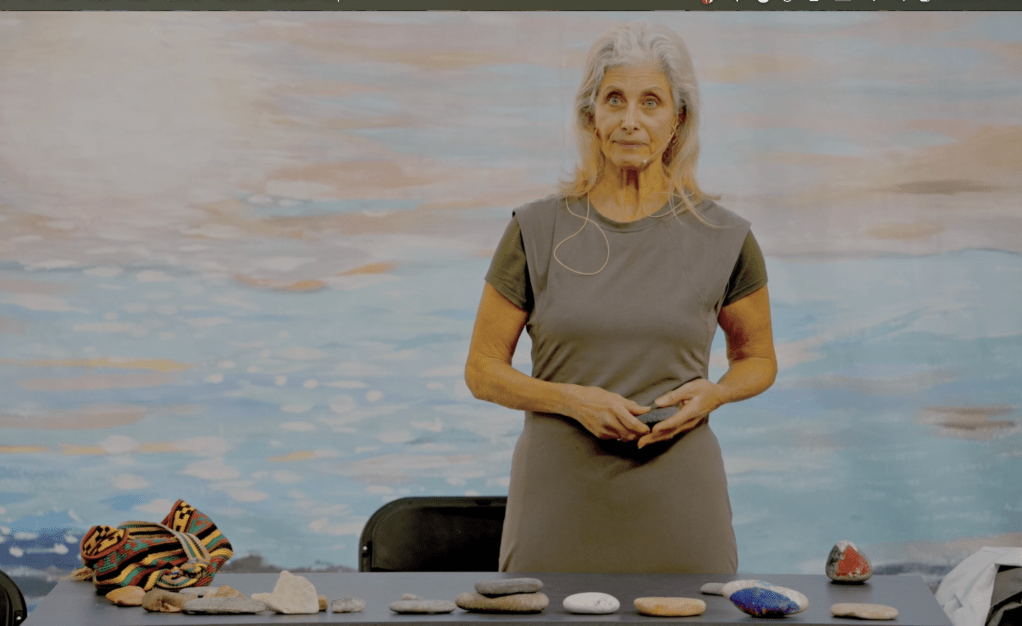
I read Picking Up Stones, first and foremost, as a work of social activism theatre. On stage, Laub is an activist, and her message is direct: both Israelis and Palestinians are victims of the war they are engaged in, and the pursuit of that war is meaningless in the face of such grave human costs. That is Laub’s conclusion, and much of the play becomes an impassioned attempt to convince the audience it should be theirs too. Though Laub’s message is a lofty one — perhaps radical in some circles — she breaks the most cardinal rule of writing: show, don’t tell. But, tell she does. As a result, the play lands more like a plea than an artistic rendering of an important, personal perspective. Laub offers a space for others cycling through the same dilemmas privately to think through the effects of war as a collective. But where she falls short is in treating the script as an artistic endeavor rather than a broadcast of personal reflection. Not enough is done to use the tools of theatre — fiction, imagination — to cast the events she shares on stage in a new light. After 80 minutes, audiences are left with the same message Laub delivers as early as the first scene, where she decries the human cost of war. Without a narrative arc, the play turns into more of a monologue than a creative interpretation of affecting moments in her life. I found myself wondering: why am I watching this unfold on a stage, if the tools of theatre go unused?
All art is political, but some works do a far better job of dressing that politics up as pure theatre than others — and in those instances, I find the message becomes more potent. Here, the play misses an opportunity to explore how Jewishness complicates the boundary between the political and the personal interior world — that constant recalibration of interior religiosity against the experience of reading the news of schools being bombed in Gaza. What does it mean for the Jewish soul, having endured decades of antisemitism and genocide, to be accused of inflicting the same violence once inflicted upon it? Laub offers interesting glimpses into these questions, but I saw room for her to go further — to dare to imagine, and to trust her audience to do some of the interpretive work themselves. Because it is in that trust that some of the new ways of collective thinking, the very thing Laub seeks to nurture, might actually take root.
Laub has plenty of material to work with, and the vignettes about her personal life were what I found most engaging. Many people will find Laub’s performance offensive or wrong — but those are exactly the people who most need to sit with her message of rehumanization. The trouble is, the performance as it stands won’t be enough to convince them to stay for the full 80 minutes.


Leave a Reply